Recollection
Scent and memory are closely tied together. A single smell can bring back a place, person, feeling, or moment that may have been forgotten.
This UI/UX concept turns that connection into a scent-based journaling experience, where users can record daily memories through smells, emotions, and personal reflections. Each entry becomes part of a personal memory archive, allowing users to look back on past moments through both written entries and scent associations.
To make the archive easier to navigate, entries are color-coded by scent category, creating a visual system that helps users recognize patterns across their memories. The experience also encourages daily reflection by prompting users to complete an entry before accessing their history, making the act of remembering feel intentional, personal, and sensory.
Recollection prototype
Journey Map
Brainstorming & ideation
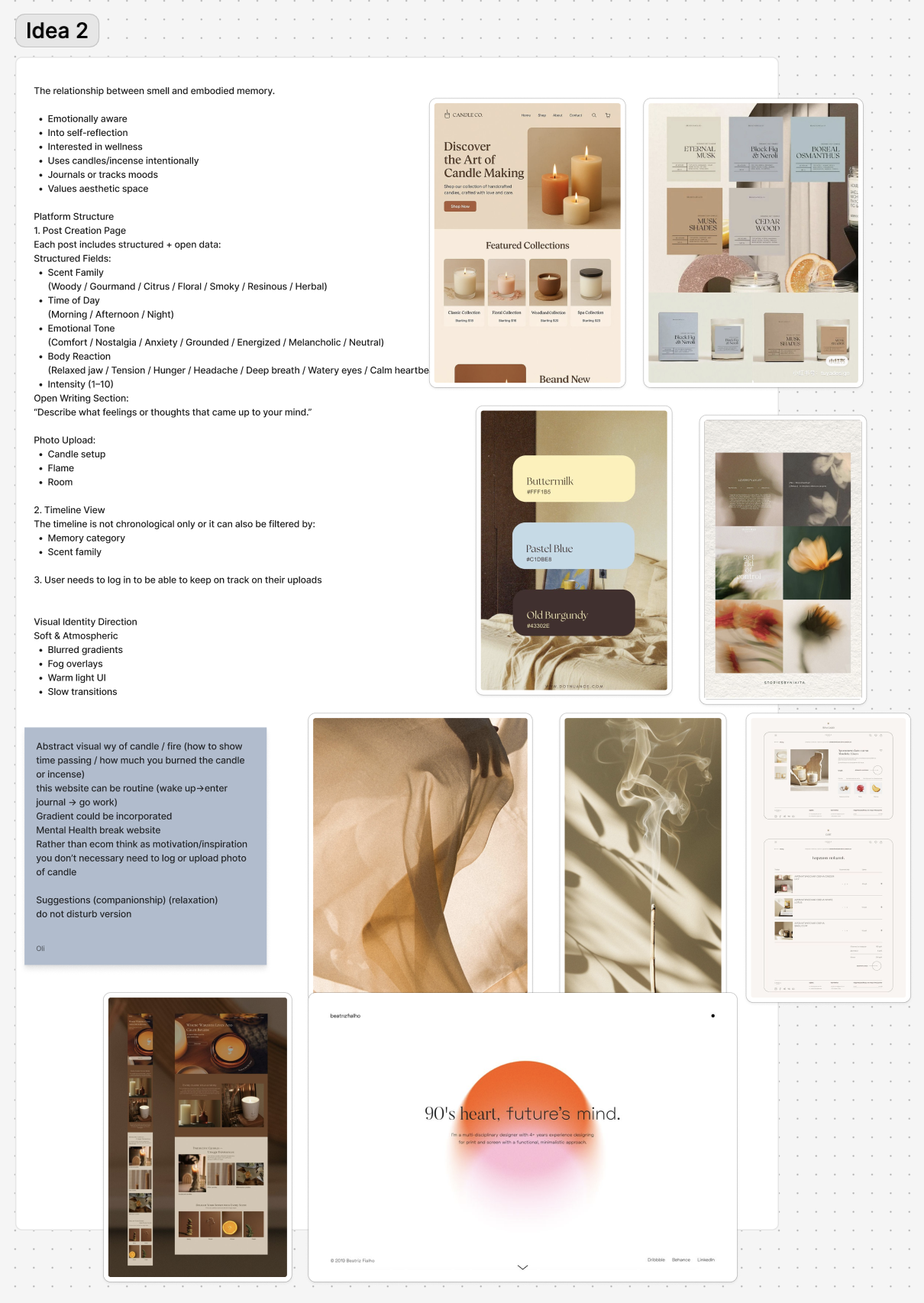
The ideation started with the relationship between scent and embodied memory. I wanted to embody the idea that smell can hold emotion, place, time, and personal history. Through this, I created an experience that felt less like a traditional journal and more like a quiet ritual, where users could slow down and document moments through scent, mood, and reflection.
During the brainstorming phase, I explored users who are emotionally aware, interested in wellness, and use candles or incense intentionally as part of their routine. From there, I mapped out structured entry fields such as scent family, time of day, emotional tone, body reaction, scent intensity, and open-ended thoughts. Visually, I looked at warm light, blurred gradients, fog overlays, soft UI moments, and slow transitions to create an atmosphere that feels intimate, sensory, and calming.
Journey Map
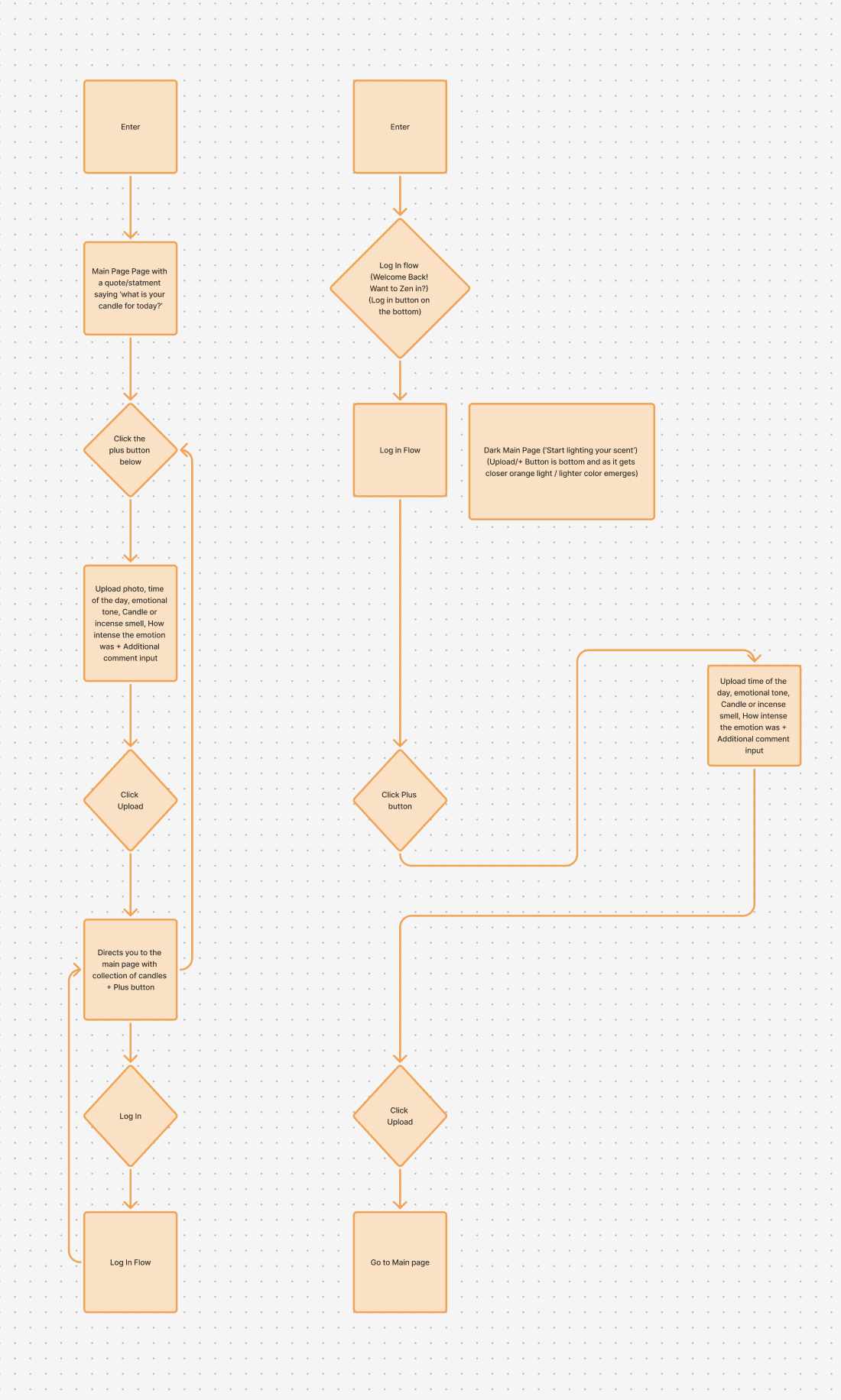
The experience is designed around a daily scent entry. When users enter the platform, they are greeted with a reflective prompt, such as “What is your candle for today?” This creates a softer emotional entry point before guiding them into the journaling flow.
Users begin by selecting the plus button to create a new entry. From there, they can upload a photo, choose the time of day, select an emotional tone, record the scent or candle they used, describe how intense the emotion was, and add any personal thoughts. Each entry is then saved into a personal memory archive, where memories can be revisited through both written reflection and scent association.
To make the system easier to navigate, entries are color-coded by scent category. This creates a visual timeline of memories, helping users recognize emotional and sensory patterns over time. The platform also encourages consistency by prompting users to complete a daily entry before accessing their history, turning memory tracking into a small ritual rather than just a database.
Complete flow